
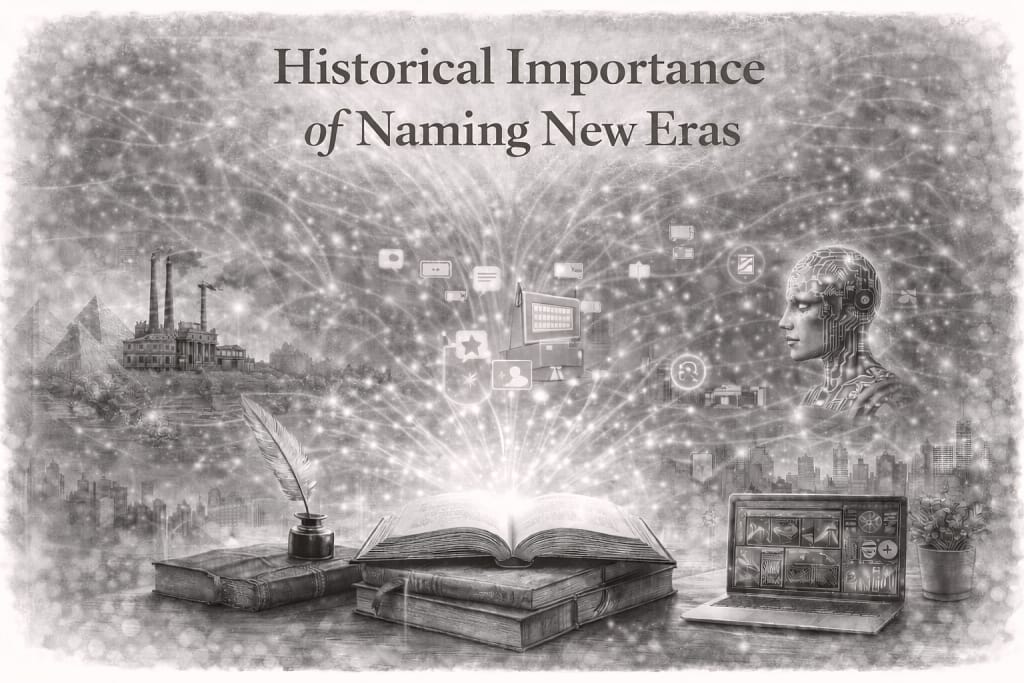
Human civilizations always create new language at times of profound technological and cultural transformation.
Industrial Revolution
Gave rise to terms like “factory,” “mechanization,” and “workforce.”
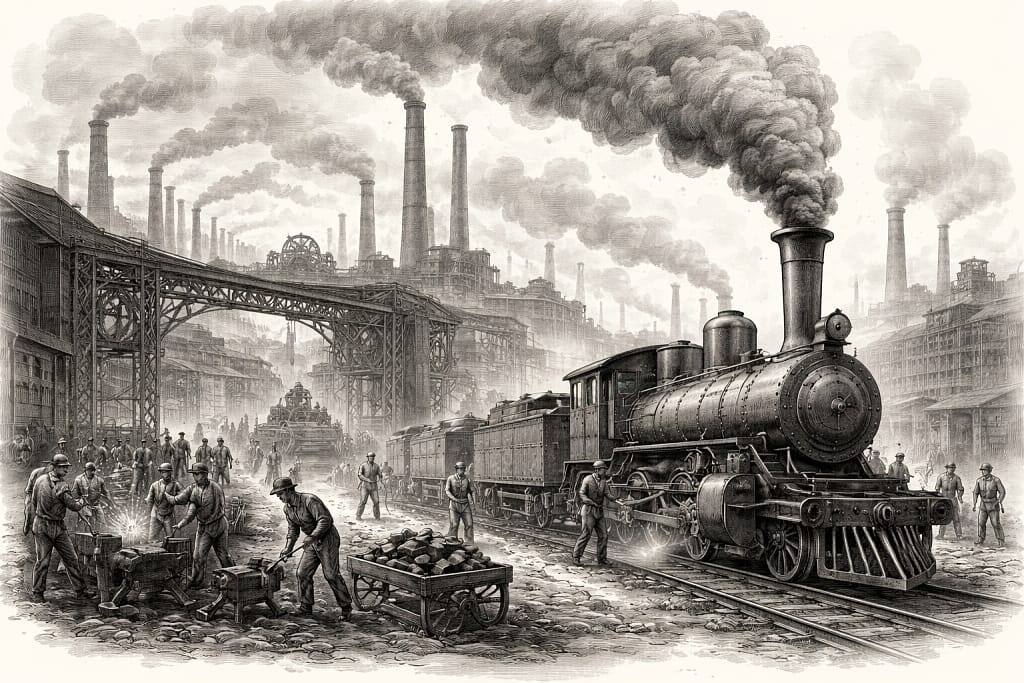
We built machines that multiplied human strength beyond imagination,
and then measured human worth by how fast they could keep up. We transformed time into a commodity, labor into a unit, and people into parts of a system that never slept. Productivity soared, but for the first time in history, progress moved faster than compassion, and generations had to fight to reclaim their humanity inside the machine.
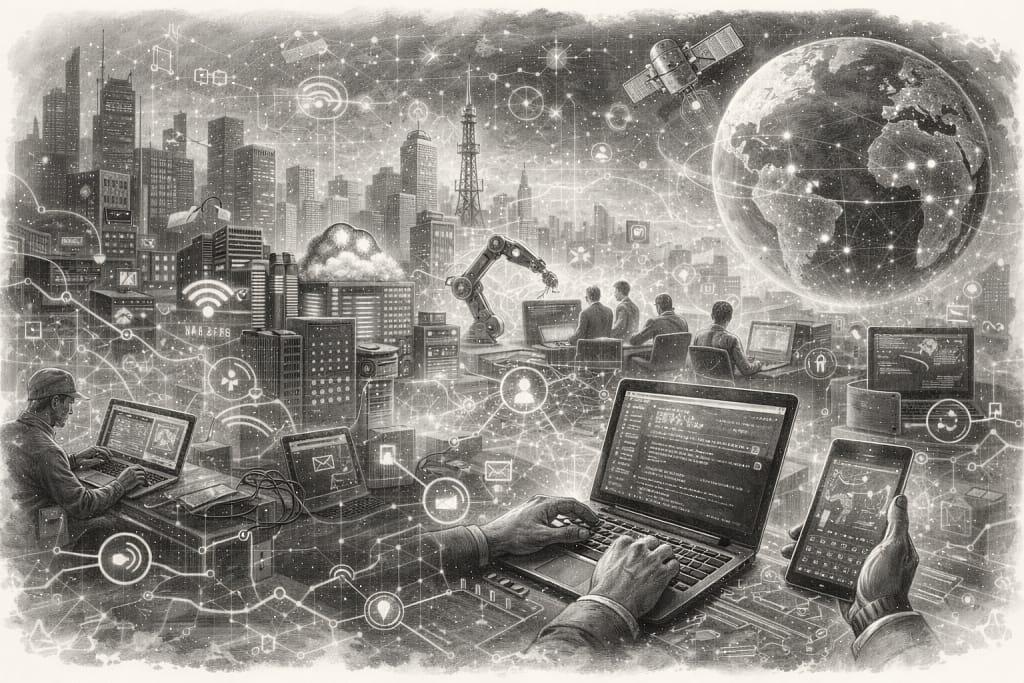
Digital Age
Introduced “internet,” “online,” “virtual,” “social media,” and “cloud.”
We connected the world in seconds, but didn’t prepare the human mind for infinite information. We replaced distance with immediacy, patience with speed, and depth with convenience. Knowledge became abundant, while wisdom became harder to find. We taught machines to process everything,
without teaching ourselves how to pause, reflect, or disconnect.
Information Era
Coined “big data,” “algorithm,” “knowledge economy,” and “automation.”
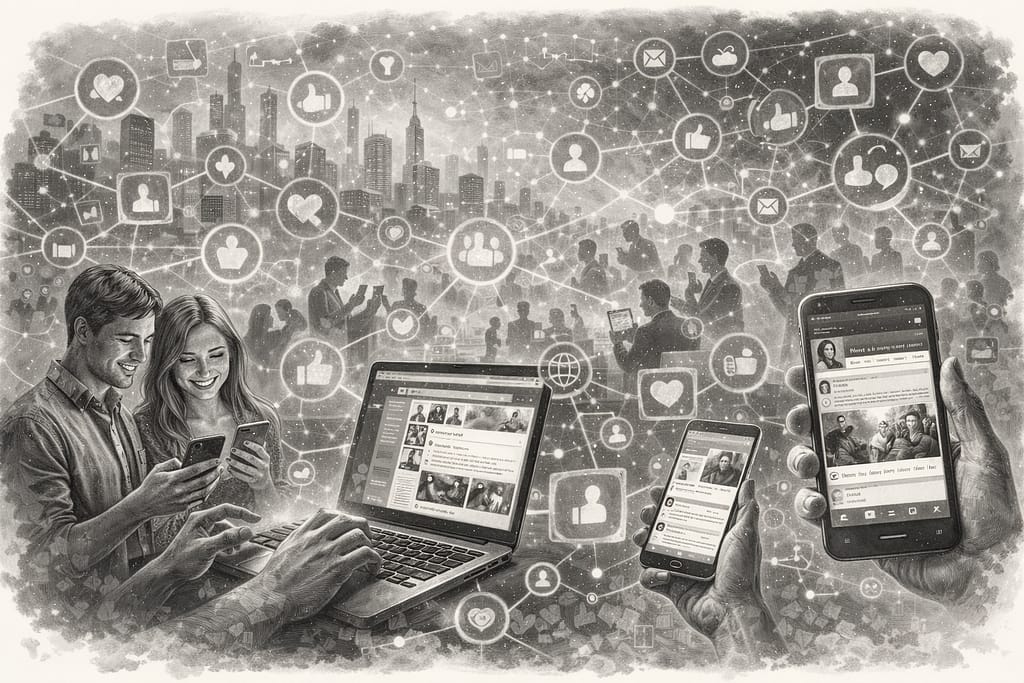
We built the most powerful psychological technology ever created,
and handed it to children without instructions. We raised an entire generation inside a digital hall of mirrors, where identity is shaped by comparison, validation, and pressure no generation has ever faced before. We optimized for engagement, and underestimated the cost to confidence, truth, and mental health.

Today, we are entering a new era that lacks an adequate term that represents AI.
We are building intelligence that can learn, decide, and scale faster than any system in human history, without first agreeing on what it should value.
We are automating decisions that affect livelihoods, opportunity, and truth, often without visibility, accountability, or recourse.
For the first time, humanity is not just shaping tools, we are shaping entities that will shape us in return. And so the question is no longer:
Can we build it? – But is humanity at the center of what we are building?
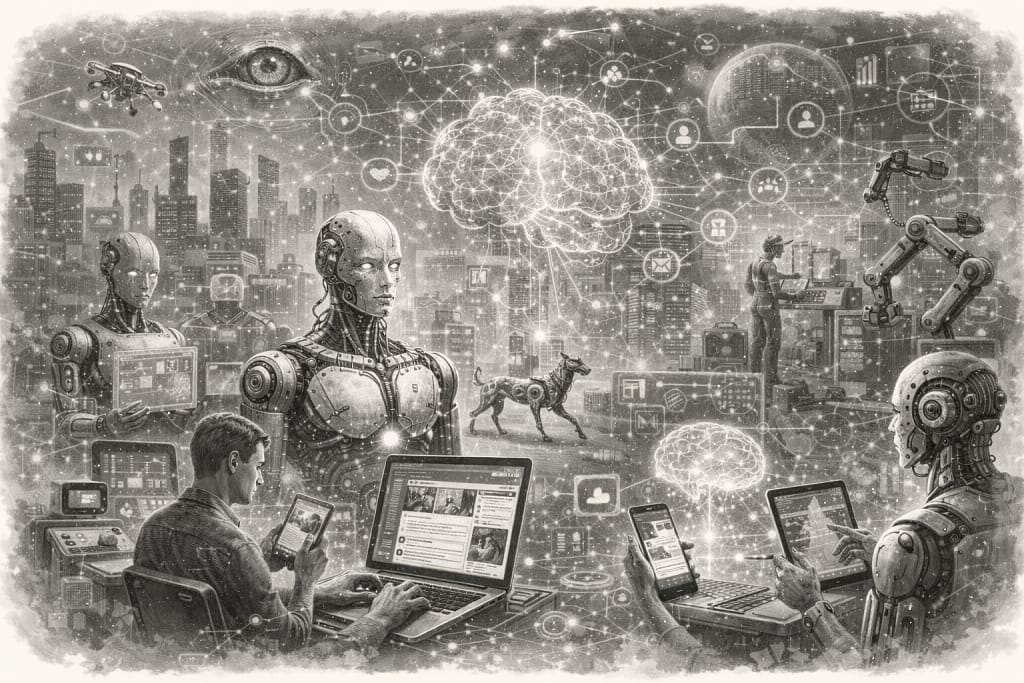
So let’s define it:
We have “AI.”
We have “digital transformation.”
We have “human-centered design.”
But we do not have a single concept that unifies human identity, AI acceleration, and digital infrastructure into one coherent idea.
This gap is dangerous. It prevents society from fully understanding the shift underway, and from shaping it responsibly.
Every revolution before this one changed what we do. This one is changing who we are. And without intentional alignment, speed becomes erosion, intelligence becomes influence, and progress loses its moral compass.
That is why Humaital exists.

What happens when technology advances faster than humanity can adapt?
The Innovation Readiness Gap
Technology has been accelerating faster than humanity can keep up. For decades, the primary question in tech has been “How fast can we go?” This has led to incredible progress, but also a growing disconnect between our tools and our well-being.
The Innovation Readiness Gap is precisely why Humaital must exist.
Today’s vocabulary treats “digital,” “artificial intelligence,” and “human capability” as separate domains.
But the future will not treat these as separate domains. The future demands a fusion — a harmonious integration of:
- Human judgment
- AI intelligence
- Digital infrastructure
Humaital names that fusion. It provides a language for the new reality emerging on the other side of the Innovation Readiness Gap — a world where human potential is expanded, not diminished; where AI becomes a partner, not a rival; where digital systems amplify rather than replace human creativity, compassion, and purpose.
Humaital fills that Gap.
